By Catherine Male
To understand the transformation of television, it is important to distinguish between two concepts: evolution and revolution. Though often used interchangeably, they carry distinct meanings in the context of technology.
Evolution refers to gradual development, progression, or advancement over time. In this article, we explore how television has evolved since its inception from bulky analogue sets to sleek smart TVs. Revolution, on the other hand, signifies a dramatic shift or upheaval.
In the world of television, this refers to groundbreaking changes that have redefined the medium, particularly the leap from digital to smart technology.
From analogue to digital
The story of television began nearly a century ago. In the 1920s, American inventor Philo Taylor Farnsworth introduced the first television system, which captured moving images using a beam of electrons. Fast forward to the 1930s, and the first fully electronic cathode ray tube (CRT) television was manufactured by Telefunken in Germany.
Since then, the evolution of television technology has been marked by significant milestones. From black and white to colour, from manual knobs to remote controls, and from limited programming to satellite and cable, the transformation has been extensive. However, the most impactful development has been the shift from analogue to digital broadcasting.
Analogue television, which dominated the 20th century, relied on continuous signals to transmit video and audio. These signals, encoded through amplitude, frequency and phase, were vulnerable to interference and signal degradation. The arrival of digital television (DTV) brought a new era. Digital broadcasting uses binary code — 1s and 0s — to deliver clearer picture and sound quality. Additionally, digital signals allowed for more efficient bandwidth usage, enabling a greater number of channels.
Rise of the flat screen
With digital broadcasting came the introduction of flat-screen TVs, marking the decline of the once-ubiquitous boxy sets affectionately known in Uganda as “Kibuto” TVs due to their bulky backs. Digital televisions not only enhanced signal reception but also ushered in high-definition (HD) resolution, superior sound quality, and more compact, stylish designs.
This shift in form and function set the stage for a technological revolution. As consumers embraced the convenience and performance of digital TVs, engineers were already working on the next frontier: Smart TVs.
Technological overthrow of smart TVs
Smart TVs first appeared around 2011, originally referred to as Internet TVs. Unlike their predecessors, smart TVs combine traditional television features with integrated internet capabilities. Though initially more expensive, their multifunctionality quickly justified the cost for many consumers.
Smart TVs allow users to connect to the internet via Wi-Fi or Ethernet, providing access to a wide array of streaming services such as Netflix, YouTube, Amazon Prime Video, and more. They also enable web browsing, gaming, and application downloads, transforming the television into an interactive entertainment hub.
According to Arnold Sekamatte, an appliance technician and sales agent with expertise in televisions, the uptake of Smart TVs in Uganda was swift and seamless. “Just like how people were fascinated by smartphones, so were they by Smart TVs,” he explains.
He adds: “They were well received in the Ugandan market, especially among households with children and young adults who enjoy platforms like Netflix and YouTube. In offices, Smart TVs also play an important role in communication, particularly for video conferencing, which became vital after the Covid-19 pandemic.”
Functionality, features
Modern smart TVs come equipped with a range of features designed for user convenience and enhanced experience. These include screen casting, which allows users to project content from their smartphones or laptops to the TV screen, and bluetooth connectivity, which enables pairing with soundbars or other audio devices for improved sound output.
However, before purchasing a Smart TV, Sekamatte advises consumers to consider factors such as the brand’s operating system and availability of spare parts.
“Some brands restrict users to proprietary applications, limiting access to popular apps. And having available spare parts is crucial for long-term maintenance in case of technical issues,” he says.
Market landscape
Almost all major appliance brands, including Samsung, LG, Sony, Hisense, Sharp, and Toshiba, now manufacture smart TVs. Models vary widely in size, ranging from compact 40-inch sets to massive 70-inch screens, depending on users’ preferences and purpose.
While Samsung leads the Smart TV market in the United States as of December 2024 (according to Statista), Hisense has emerged as the most popular brand in Uganda. Sekamatte attributes this to its affordability and suitability for domestic use, making smart technology more accessible to a wider demographic.
What comes next?
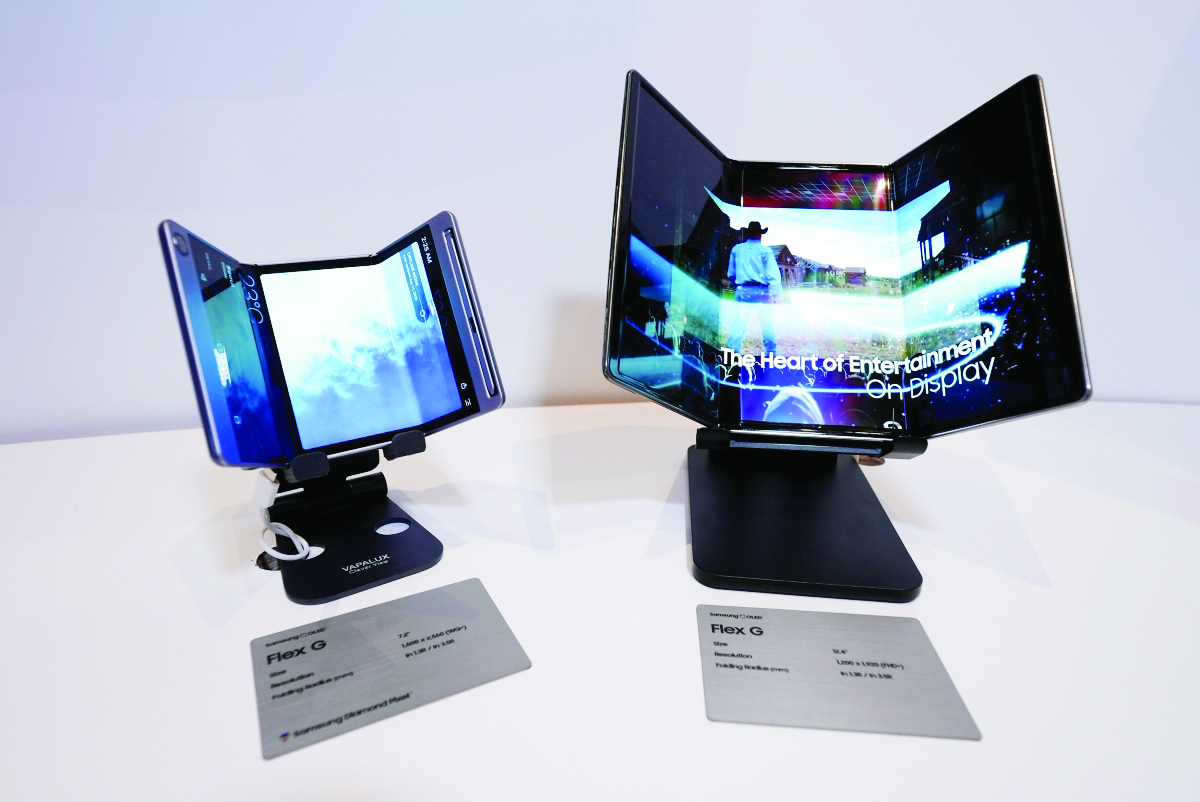
Smart TVs represent a significant advancement from digital televisions, offering expanded functionality, connectivity, and a more immersive viewing experience. Yet, as with all technologies, innovation does not stop here.
It is only a matter of time before a new wave of development emerges, perhaps integrating AI-driven personalisation, voice-assisted controls, or even augmented reality.