By Pr Isaiah White
Jonah 1 presents a prophet who receives a direct command from God: “Go to the great city of Nineveh and preach against it” (v. 2, NIV). Instead, Jonah runs in the opposite direction. The chapter carries a sober warning for every believer: disobedience is never neutral. It carries danger, cost, and collateral damage.
Horrors of fleeing
Jonah “ran away from the Lord” (v. 3). He went down to Joppa, down into the ship, and down into a deep sleep amid the raging storm (v. 5). Spiritually, disobedience always moves downward—away from God’s presence, peace and purpose.
God sent a “great wind” and a violent storm (v. 4). This was not random punishment but merciful pursuit, intended to awaken Jonah before total ruin. Several lessons emerge.
• No one can outrun God (Psalm 139:7–10).
• Fleeing may feel like freedom at first, but it leads to chaos and confrontation.
• The longer we run, the sharper the wake-up call becomes.
The devil’s provision
“But Jonah… found a ship going to Tarshish… and went down into it” (v. 3). The ship was ready and waiting. When a believer chooses disobedience, the enemy often provides convenient “ships”—opportunities, people or distractions that make rebellion appear reasonable.
These may take many forms:
• A “perfect” job in the wrong place that pulls one away from church and calling.
• Friends who normalise compromise.
• Entertainment, addictions or escapes that dull conviction.
The devil does not force obedience; he simply supplies the transport. The ship looked like a solution but became the vehicle of Jonah’s near destruction.
The warning is clear:
• Every “no” to God invites an easier but dangerous alternative.
• What appears to be an “open door” may in fact be a detour from God’s will.
• Yet even in wrong places, God can still intervene—as He later did for Jonah.
Paid the fare
“After paying the fare, he went aboard…” (v. 3). Jonah spent money to run from God, a detail that carries deep meaning. Sin always comes at a cost.
Financially, many waste resources on destructive habits—alcohol abuse, gambling, pornography, reckless living or dishonest gain that later brings legal or medical expenses. Many can testify, “I paid dearly to move farther from God.”
Relationally, the cost may appear in broken marriages, strained family ties, lost friendships and damaged reputations.
Emotionally and physically, disobedience often brings sleepless nights, anxiety, depression and stress-related health problems (Psalm 32:3–4).
Spiritually, the heaviest losses include diminished joy, weakened prayer life, reduced intimacy with God and lost usefulness in His kingdom.
Scripture states plainly: “The wage of sin is death” (Romans 6:23). Physical death may not come immediately, but peace, fruitfulness and spiritual vitality often die long before the body does. Obedience may seem costly in the moment, but disobedience always proves more expensive in the end. Jonah paid the fare to Tarshish, but the real bill came in the storm and the fish.
Sin hurts others
The pagan sailors suffered greatly because of one man’s disobedience.
• They were terrified and cried out to their gods (v. 5).
• They threw valuable cargo overboard, suffering financial loss.
• They rowed desperately but could not reach land (v. 13).
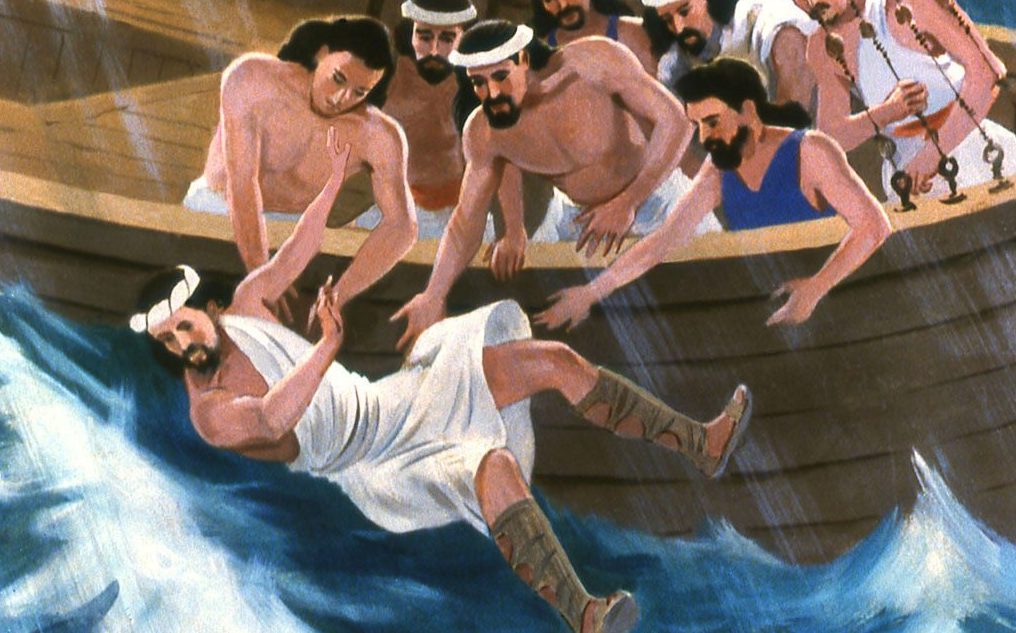
• They reluctantly cast Jonah into the sea, fearing the God of Israel (vv. 14–16).
Their piercing question—“On whose account are we suffering this evil?” (v. 7)—correctly traced the storm back to Jonah’s rebellion. One man’s disobedience endangered everyone on board.
The lesson is unmistakable: no sin is truly private. Disobedience creates storms that others must endure—family members, colleagues, the church and even unbelievers. Sin pollutes the spiritual environment much like industrial waste contaminates a river for an entire community.
Scripture repeatedly illustrates this ripple effect.
Achan’s secret theft (Joshua 7) led to Israel’s defeat at Ai, the death of 36 soldiers and judgment on his household. David’s sin with Bathsheba (2 Samuel 11–12) resulted in Uriah’s death, the loss of the child and lasting turmoil within David’s family. Korah’s rebellion (Numbers 16) brought devastating judgment upon many. Even Adam’s fall (Genesis 3; Romans 5:12) introduced sin and death to all humanity.
Each account echoes the sailors’ question: “On whose account…?” Sin is never isolated. Like ripples from a stone cast into water, its effects travel far beyond the original act.