By Dr Edward Tamale Ssali
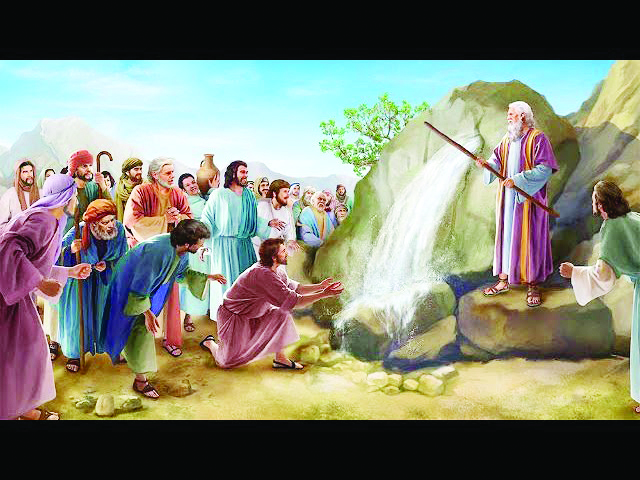
“And all the congregation of the children of Israel journeyed from the wilderness of Sin, after their journeys, according to the commandment of the LORD, and pitched in Rephidim: and there was no water for the people to drink. Wherefore the people did chide with Moses, and said, Give us water that we may drink. And Moses said unto them, Why chide ye with me? wherefore do ye tempt the LORD? And the people thirsted there for water; and the people murmured against Moses, and said, wherefore is this that thou hast brought us up out of Egypt, to kill us and our children and our cattle with thirst? And Moses cried unto the LORD, saying, What shall I do unto this people? they be almost ready to stone me. And the LORD said unto Moses, Go on before the people, and take with thee of the elders of Israel; and thy rod, wherewith thou smotest the river, take in thine hand, and go. Behold, I will stand before thee there upon the rock in Horeb; and thou shalt smite the rock, and there shall come water out of it, that the people may drink. And Moses did so in the sight of the elders of Israel. And he called the name of the place Massah, and Meribah, because of the chiding of the children of Israel, and because they tempted the LORD, saying, Is the LORD among us, or not?” (Exod. 17:1–7 KJV)
Historical context
The passage opens with a detail that is easy to overlook: the Israelites journeyed “by stages, according to the commandment of the Lord”. The pillar of cloud by day and fire by night did not lead them to an oasis. It led them to a waterless camp.
Here lies the first great lesson of providence. We may be in the path of obedience and still encounter hardship. The destination at Rephidim was divinely appointed; the difficulty was not evidence of God’s absence but an opportunity for His power to be revealed.
In the ancient Near Eastern world, water meant life. Caravans planned their routes around reliable sources. To arrive at Rephidim and find no water was not merely inconvenient — it was dangerous. The people’s fear was understandable, but their memory was short. They had witnessed the Nile turned to blood, the Red Sea parted, and manna fall from heaven. Yet they still asked, “Is the Lord among us or not?”
Divine response
God’s response is striking. He does not answer with judgement but with provision. He instructs Moses to take the elders and the staff — the same rod that struck the Nile — and strike the rock at Horeb. “Behold, I will stand before you there on the rock,” God promises.
This moment reveals the heart of divine providence. The apostle Paul later draws out its deeper meaning: “That Rock was Christ” (1 Corinthians 10:4). The striking of the rock points forward to the smiting of the Saviour.
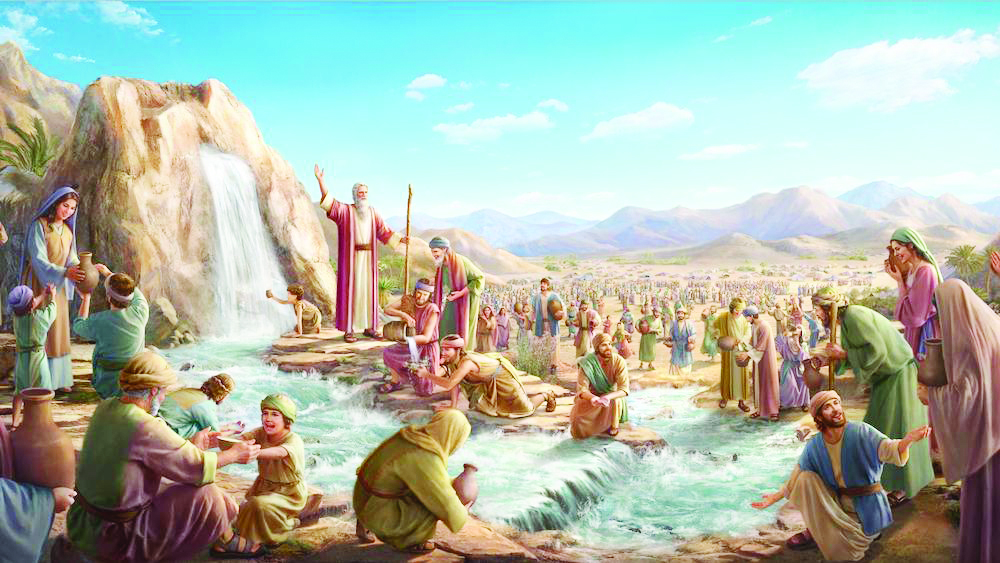
While judgement might justly have fallen on the people, God instead provided life-giving water. More than that, He promised His presence. The people needed water, but what they needed most was the assurance that God was still with them. His provision flowed not merely from power but from covenant love.
Providence in modern trials
Though this account is ancient, its message remains timely. In today’s world, many regions still struggle with water scarcity, and the experience of Rephidim does not feel distant. The passage reminds believers that God’s provision often appears in unexpected ways.
For many Christians, the wilderness is not a desert but a season — job loss, illness, financial pressure, or strained relationships. Like Israel, believers can be tempted to question God’s presence when resources run dry.
Yet the testimony of Scripture and of many lives today is that God still provides. Sometimes provision comes dramatically; at other times it comes quietly through timely opportunities, medical help, supportive friends, or opened doors. What remains constant is God’s faithfulness.
The story also challenges believers to respond differently from the Israelites. Instead of murmuring, Moses cried out to the Lord. Instead of panic, he chose obedience. That posture still matters. Remembering past provisions, cultivating gratitude, and seeking God first all help to build resilient faith.
In an age that prizes instant results, waiting on God can feel uncomfortable. Yet Scripture reminds us that the testing of faith produces endurance (James 1:3–4). The wilderness, though difficult, often becomes the place where trust grows deepest.
A Call to enduring faith
Massah and Meribah stand as both warning and encouragement — a warning against hardened unbelief and an encouragement that God does not abandon His people in dry places.
Exodus 17 assures us that no wilderness is beyond God’s reach. The Lord who brought water from the rock still knows how to sustain His people. When circumstances appear barren and answers seem delayed, His presence remains the believer’s greatest provision.
In uncertain times, the call is simple but demanding: trust Him. The God who met Israel at Horeb still provides what His people need, exactly when they need it.