

By Beatrice Nakibuuka
For millions of girls and women across Uganda, menstruation is not simply a monthly biological process. It is shaped by poverty, stigma, gender inequality, disability, water scarcity and gaps in public health services. While menstruation is a natural sign of health and fertility, the lack of affordable sanitary products, clean water, private toilets and accurate information has turned it into a quiet but serious challenge, one that affects education, dignity and future opportunities for many girls and women.
An estimated five million school-going girls in Uganda lose up to 18 per cent of their learning time each year because they cannot manage their periods safely and confidently. Some miss school due to pain or lack of sanitary products, while others stay home out of fear of staining their uniforms, being ridiculed by classmates, or lacking privacy to change. For many girls, menstruation marks the beginning of repeated absenteeism, poor academic performance and, eventually, dropping out of school.
When a natural process becomes a barrier to education
Menstruation-related absenteeism remains one of the least discussed barriers to girls’ education despite its serious consequences. In many schools, especially in rural and underserved areas, emergency sanitary pads are unavailable, running water is limited, and separate toilets for girls are lacking. When a girl starts her period unexpectedly, she often has no choice but to return home.
Godfrey Tumwizere, a sexual and reproductive health and rights specialist at Action 4 Health Uganda, says the challenge is persistent and deeply rooted.
“A girl, on average, may miss two to five days of school each month due to menstruation. This affects her academic performance and ability to keep up with her peers,” he explains.
Missing several school days every month means missing lessons, tests and group activities. Over time, the gap widens, making it harder for girls to compete academically. Some gradually lose interest in school, reinforcing cycles of poverty and early marriage.
Understanding the menstrual cycle
Despite its impact, menstruation is still poorly understood, even among those who experience it. Many girls begin menstruating without prior knowledge, which often leads to fear, shame and confusion.
Dr Joseph Nsengiyumva, a gynaecologist at Bethany Women’s Hospital in Luzira, explains that menstruation is part of a carefully regulated hormonal cycle.
“Menstruation occurs when the inner lining of the uterus sheds after fertilisation does not take place,” he says.
Hormones released by the brain and ovaries control this cycle, which usually lasts about 28 days, although variations are normal. Dr Nsengiyumva notes that the cycle affects more than reproductive organs.
“During the menstrual cycle, changes occur not only in the reproductive system but throughout the body. Hormonal changes can cause mood swings, breast tenderness, cramps, bloating and fatigue,” he explains.
Girls usually experience their first period, known as menarche, around the age of 12, though it may occur as early as eight or as late as 16. Health experts advise seeking medical attention if menstruation has not started by age 16, as it may indicate an underlying medical condition.
What women and girls use and why it matters
In urban areas, disposable waterproof sanitary pads are the most used menstrual products. However, their cost places them beyond the reach of many families. A packet of pads costs between Shs2,000 and Shs5,000, money many households struggling with food, school fees and rent cannot afford every month.
As a result, many girls and women resort to alternatives such as reusable cloth, old clothes, cotton wool, toilet paper, leaves and mattress foam. While some of these options provide temporary relief, health experts warn that unsafe materials increase the risk of infections.
Dr Nsengiyumva cautions against certain substitutes.
“Cotton wool and toilet paper absorb easily but may break and remain in the vagina as foreign bodies, causing bacterial infections and unpleasant discharge. If they must be used, cotton wool should be wrapped in gauze,” he advises.
Reusable cloth pads, however, can be safe if handled properly. Experts recommend washing them with detergent, rinsing thoroughly, drying in direct sunlight and ironing them before reuse. Sunlight is particularly important because ultraviolet rays help kill bacteria and prevent infections.
How often should pads be changed?
One often overlooked aspect of menstrual hygiene is how frequently pads should be changed. Wearing one pad for too long can lead to irritation, unpleasant odour and infections.
Health professionals recommend changing pads every two to six hours, depending on the menstrual flow. Florence Nyangoma, a businesswoman who has managed menstruation for decades, says comfort should guide decisions.
“You do not have to wait until the pad is completely soaked. If you feel uncomfortable or notice irritation or odour, change it,” she advises.
Women with heavy flow may need to change pads every two to four hours, while overnight use should not exceed eight hours. Regular changing is not a luxury but a health necessity.
Dealing with allergies and irritation
Menstrual products affect women differently. Some experience allergic reactions to disposable pads due to chemicals, fragrances, dyes or synthetic materials.
Grace Akello, a university student, recalls years of discomfort before identifying the cause.
“I used to develop bruises and irritation. After trying different disposable pads, I realised I was allergic. Switching to reusable pads helped me greatly,” she says.
Dr Immaculate Nabukenya, a medical officer at Action 4 Health Uganda explains that irritation may result from friction, pad thickness, poor airflow, prolonged use or sensitivity to certain materials.
“Using breathable materials, changing pads regularly, applying protective creams or switching to alternative products can help,” she says.
Her advice highlights an important reality: menstrual hygiene is not the same for everyone. Women and girls need options and the freedom to choose what suits their bodies.
Disability, menstrual dignity
Girls with disabilities face additional challenges that are often overlooked. Beyond poverty and stigma, they must deal with inaccessible toilets, dependence on caregivers and widespread misconceptions about disability and sexuality.
Aisha Namugga, who was born with a physical disability, recalls the confusion she experienced during her first period.
“My parents had never talked to me about menstruation. My sister explained and showed me how to use pads. Without her, I would have struggled,” she says.
Namugga also recounts harmful assumptions she later encountered.
“My mother was told I would not menstruate because of my disability,” she says, highlighting persistent misinformation.
In extreme cases, girls with intellectual disabilities have been sterilised without consent as a way of managing menstruation, a practice widely condemned as a human rights violation.
Dr Nabukenya warns that such practices are unacceptable.
“Girls with disabilities already face barriers such as lack of privacy, limited mobility and dependence on caregivers. When these challenges are ignored, they are exposed to infections, abuse and loss of dignity,” she explains.
Water scarcity and menstrual hygiene
Access to water is essential for safe menstrual hygiene, yet it remains a challenge in many parts of Uganda. In water-scarce areas such as Karamoja, managing menstruation becomes even more difficult.
Judith Ayamo from Nakapiripirit recalls traditional coping methods.
“Girls used to sit on sand during menstruation because water was scarce,” she says.
Anna Tukei, a lead mother in Longaroi Village, describes the long distances women walk to fetch water.
“We walk about three kilometres to collect water. I used to wipe myself and continue working. People avoided coming near because of the smell,” she says.
Although awareness has improved, affordability remains a challenge.
“Pads cost Shs2,000, and many women still cannot afford them,” Tukei adds.
For families living hand to mouth, menstrual hygiene often competes with food and other basic needs.
Sustainable, affordable alternatives
In response to these challenges, attention is increasingly turning to reusable sanitary pads and menstrual cups as long-term solutions.
Dr Nabukenya explains that menstrual cups, made from medical-grade silicone, can last up to 10 years.
“For a one-time cost of about $10, they eliminate the monthly struggle of buying pads and require minimal water,” she says.
Research suggests that menstrual cups can reduce school absenteeism by more than 90 per cent when used correctly. However, experts stress the need for proper training, hygiene practices and medical guidance.
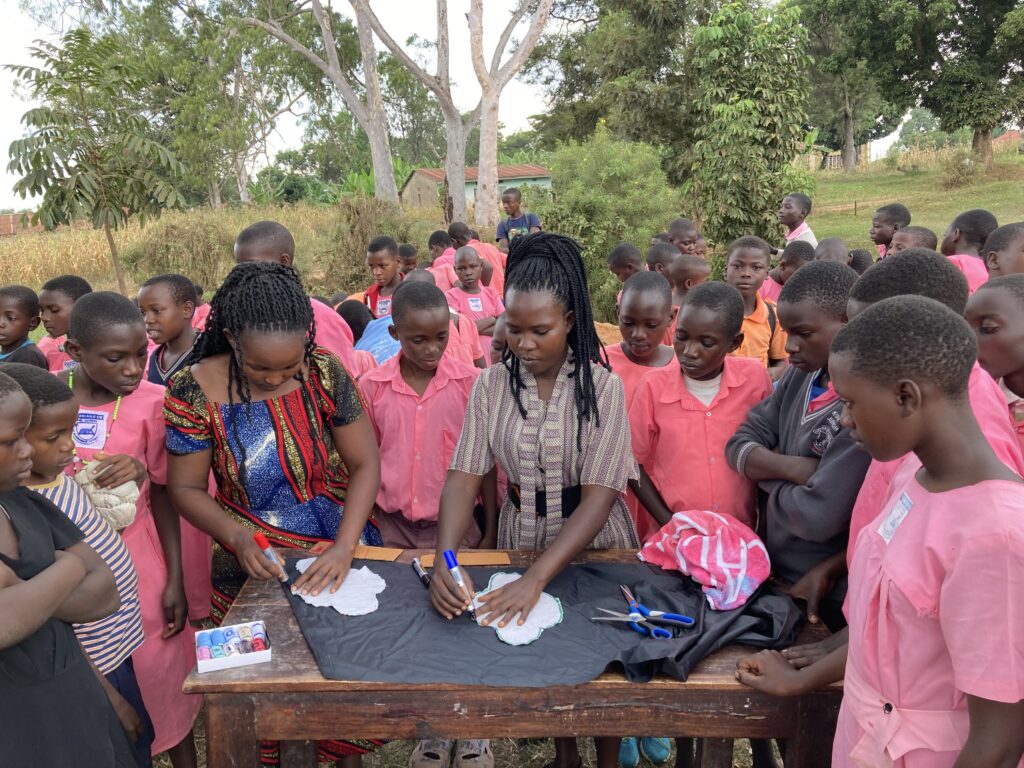
Local organisations are also stepping in. Girl Up Initiative Uganda trains girls to make reusable pads using affordable materials. Founder Monica Nyiraguhabwa says the initiative aims to empower girls.
“We want girls to use locally available resources to stay in school and manage menstruation safely,” she says.
The role of boys, men and policy
Menstrual hygiene is often treated as a women’s issue, yet experts say meaningful change requires community involvement.
Bob Mayonza of Pilgrim Centre for Reconciliation believes men play a vital role.
“When fathers and brothers understand menstruation, entire communities become supportive. Men must be part of the conversation,” he says.
Namugga agrees and calls for stronger policy support.
“Just like mosquito nets and condoms, sanitary pads should be freely available in schools and health centres,” she says.
Why menstrual hygiene matters
Menstrual hygiene is not just about comfort. It is about dignity, health, education and equality. The World Bank estimates that girls failing to complete school costs the global economy up to $30 trillion in lost productivity.
Nyiraguhabwa believes improving menstrual hygiene could transform lives in Uganda.
“Ensuring access to safe and affordable menstrual products, whether disposable pads, reusable options or menstrual cups, can keep girls in school, protect their health and give them confidence to participate fully in society,” she says.


