By Nicholas Akasula
In the remote villages of Bukedea District in eastern Uganda, where many children still walk barefoot for miles to school, Anthony Okiria, founder of Amuno Rural Hub is working to make a difference.
This transformation is not driven by policy or politics, but by lived experience, resilience and a deep sense of responsibility.
From loss to purpose
Okiria’s early life was very difficult. His mother left when he was still a toddler and was never seen again. At the age of eight, he lost his father. Orphaned and vulnerable, he was later taken in by his uncle, a civil servant in Kampala.
Life in the city opened doors he had never known, school shoes, regular meals, textbooks and access to healthcare. Yet even as his circumstances improved, he could not forget the children he had left behind in Bukedea.
“I used to walk more than five kilometres to school without shoes or food. We studied under trees and shared one textbook among many pupils, yet we sat the same national examinations as children in better schools,” he says.
That experience stayed with him and, over time, shaped his sense of purpose.
Planting hope at home
In 2022, Okiria returned to Bukedea with a clear purpose. He founded Amuno Rural Hub, a community-based, youth-led organisation focused on improving access to education, safety and life skills for rural children.
What began as a small after-school literacy and numeracy programme has since grown steadily. Today, Amuno supports more than 3,700 children and 140 families.
The approach is practical. Children are taught using simple and effective methods, while also receiving meals, clean drinking water and access to basic healthcare. The setting may be modest, but it offers dignity, safety and encouragement.
Young people taking the lead
Amuno’s work places young people at the centre. Teenagers aged 13 to 18 are trained as Literacy Champions, helping younger children to learn how to read, write and count. In the process, they develop confidence, leadership skills and a sense of responsibility.
One of the initiative’s most notable innovations is Literacy on Wheels. Using bicycles, these young volunteers reach children in remote areas, holding lessons wherever space allows—under trees, in compounds or along village paths.
For many children, it is the first time that learning has come to them.
The organisation also runs panel discussions and debates, giving young people a platform to speak about issues affecting their communities. These sessions help to build confidence and sharpen critical thinking skills among participants.
Strengthening families
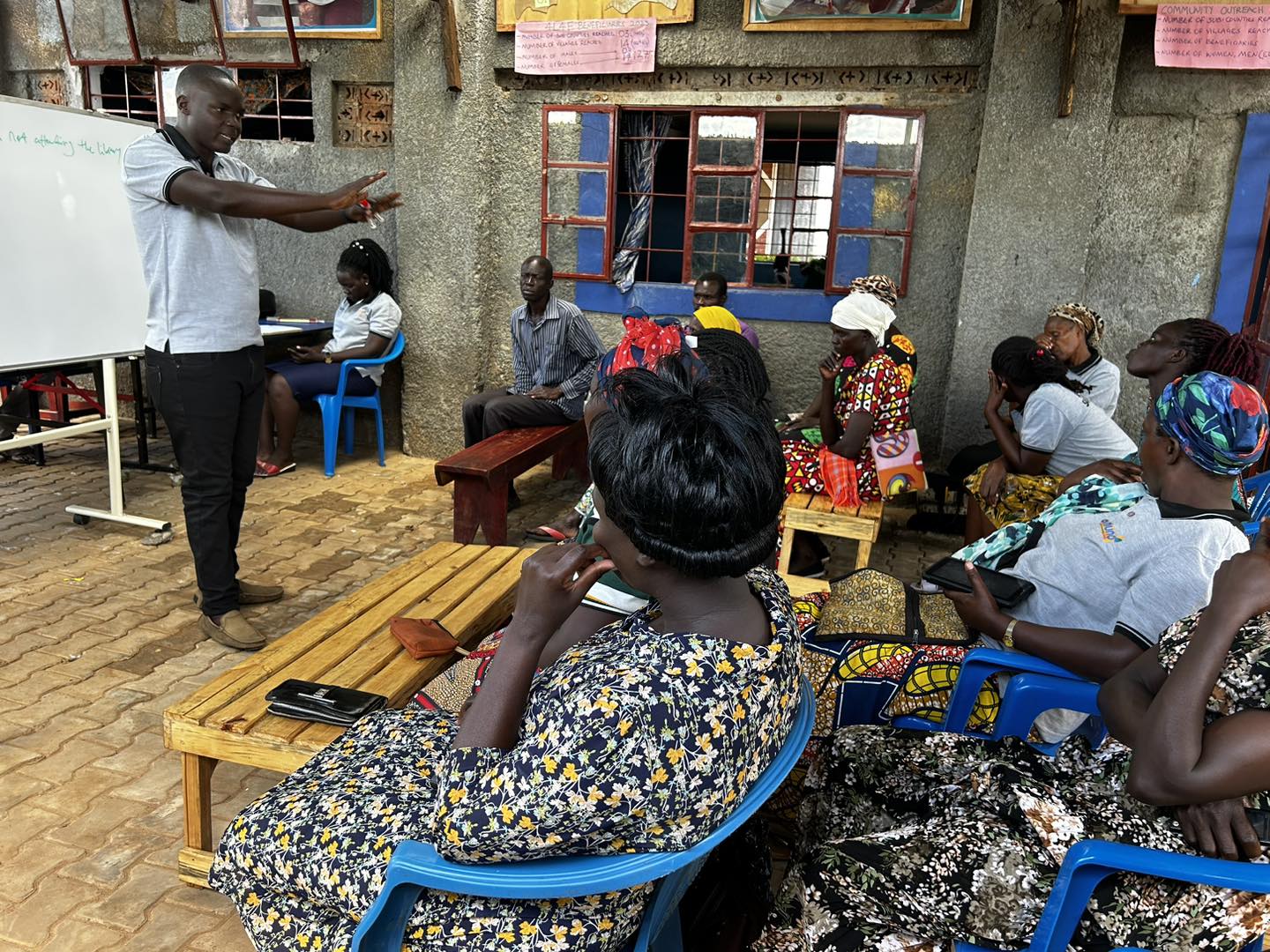
Okiria understands that supporting a child also means supporting the family. Amuno works with parents through savings groups and trains them in simple income-generating activities such as goat rearing and soap making.
Some of the most vulnerable children receive school fees support, while others take part in youth clubs focusing on science, writing and ICT.
The community centre, once a neglected space, is now active and full of life. It has become a place where children can learn, interact and feel valued. Girls are given particular attention, recognising the challenges they often face, including early marriage and limited access to education.
Future plans
Okiria hopes to expand Amuno’s work beyond Bukedea. He envisions mobile classrooms, trained teachers and stronger partnerships with organisations and government.
He believes that education systems must take into account the unequal starting points between rural and urban children.
“My pain gave me purpose,” he says. “I have seen both worlds, and I want to help bridge the gap.”
Okiria’s work is a reminder that change often begins at the grassroots. It starts with someone who has experienced the problem and chooses to act.
Amuno Rural Hub continues to welcome support from individuals and organisations willing to partner, mentor or invest in its work.
As Okiria often tells his team, “We are not just teaching children to read. We are helping them to rise.”
What others say
Bundie Kabanze of Global Fund for Children in Brussels commends Okiria’s work, describing him as a leader grounded in his community and shaped by personal experience.
She notes that Amuno’s approach goes beyond education, addressing the wider needs of children and their families.
“The Literacy Champions and Literacy on Wheels programmes are reaching children in places that are often overlooked,” she says. “It is a strong model where young people are part of the solution.”
She adds that the introduction of debates in schools is helping to nurture confident and thoughtful young leaders.
In her view, Okiria is not simply running a programme. He is building something rooted in the community, giving rural children a real chance to be seen, heard and supported.