

Question: Hello, Good Newspaper. Praise God. I would like to know the significance of blood in the Bible and what exactly it represents. What is blood, and how should I, as a Christian, understand this issue of blood in the Bible? — Anthony Musoke
Response: Thank you, Brother Anthony, for this important question. Many believers will indeed benefit from reflecting on this subject.
The Bible states: “And if any native Israelite or foreigner living among you eats or drinks blood in any form, I will turn against that person and cut him off from the community of your people… For the life of the body is in its blood… It is the blood, given in exchange for a life, that makes purification possible” (Leviticus 17:10–14, NLT).
What is blood
The concept of blood in the Bible is both central and multi-layered. Scripture presents blood as a symbol of life, atonement and moral accountability. Blood unites humanity as a shared life-force, yet it also distinguishes life from death, the clean from the unclean, and the redeemed from the condemned.
In simple terms, blood is the reddish vital fluid found in humans and animals. However, biblically it carries far deeper meaning.
The Bible approaches blood through four key lenses: physiological, psychological, sociological and spiritual. It is therefore far more than a physical substance; it is woven into humanity’s relationship with God and with one another.
Physiological aspect
Physiologically, blood transports oxygen and nutrients to body cells while removing waste products such as carbon dioxide. Pumped by the heart throughout the body, it functions both as a tissue (made up of specialised cells) and as a fluid (cells suspended in plasma). When blood flow stops, death quickly follows because body cells cannot survive without it.
In this sense, blood is the life-sustaining river within the human body, feeding, cleansing and enabling existence. Ancient cultures recognised this reality, and Scripture affirms it clearly.
Old Testament: Genesis 9:4 forbids eating flesh with its blood because the creature’s life is in the blood. Leviticus 17:11 states plainly, “For the life of the flesh is in the blood.” Animals were therefore to be properly drained before consumption (Deuteronomy 12:23–24) as a sign of respect for life.
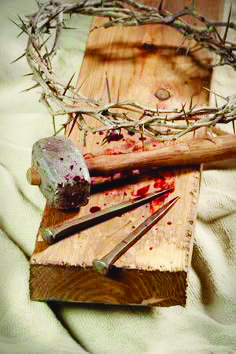
New Testament: While the focus shifts more strongly to theology, the physical reality of blood remains important. Jesus’ literal shedding of blood on the Cross, when His pierced side produced blood and water (John 19:34), grounds the doctrine of atonement in real history, not mere symbolism.
This physical truth forms the foundation for all the deeper symbolic meanings attached to blood in Scripture.
Psychological aspect
Beyond biology, blood carries profound emotional and psychological weight. It is associated with guilt, horror, trauma and moral responsibility. In Scripture, blood often acts as a silent witness to human wrongdoing, haunting both individuals and communities.
Several Old Testament accounts illustrate this clearly.
Cain, after murdering Abel, is psychologically tormented. God declares that Abel’s blood cries out from the ground (Genesis 4:10). Cain goes on to live as a restless fugitive, projecting fear onto others (Genesis 4:14). His experience shows how bloodshed burdens the human conscience.
Mosaic law also linked blood to ritual impurity. Menstruation rendered a woman ceremonially unclean (Leviticus 15:19–24), and touching a dead body had the same effect (Numbers 19:11). These laws reinforced a deep psychological awareness of the sacred boundary between life and death.
King David’s murder of Uriah to conceal his adultery with Bathsheba likewise produced lasting consequences. Through the prophet Nathan, God declared that the sword would never depart from David’s house (2 Samuel 12:10). The ongoing turmoil in David’s family reflects the heavy psychological and relational cost of bloodshed.
The New Testament presents Christ’s sacrifice as the ultimate answer to this burden of guilt. Under the old covenant, animal sacrifices provided only temporary relief and could not fully cleanse the conscience. By contrast, the blood of Christ brings lasting inner freedom.
Hebrews 10:22 therefore invites believers to draw near to God “with a true heart in full assurance of faith, with our hearts sprinkled clean from an evil conscience.” Through Christ’s blood, deep-seated guilt is cleansed, and fear of condemnation is replaced with peace and assurance.
— To be continued


