Hello, Good Newspaper, I hope you are well. I thank you for the ministry.
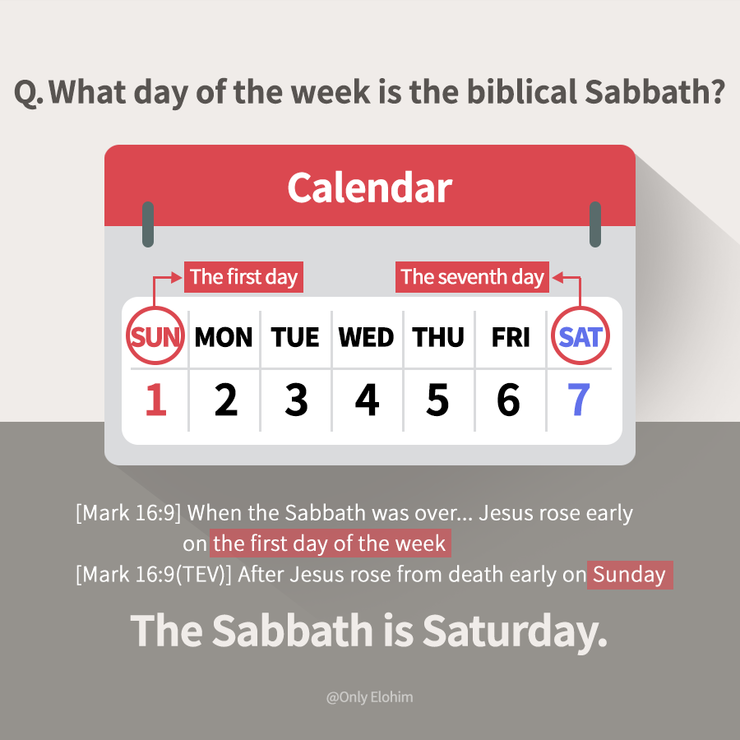
My question is: Can someone observe and obey the Sabbath day as mentioned in the Bible, and do members of the Seventh-Day Adventist Church truly observe it? — Derrick Lutalo
Response
Thank you for the question, Derrick. I am not a Seventh-Day Adventist; I am a born-again Christian. Therefore, I will not speak on their behalf. Instead, I will present what the Bible teaches, regardless of denominational views.
I assume your question comes from the many debates between different religious groups often seen in the media. At Good Newspaper, we prefer not to be dragged into the endless cycle of offence and defence in apologetics. Rather, we will look at the record as presented in the Word of God.
Let us begin with the “How.”
The How
In Jewish tradition, observing the seventh day meant stopping work. The law in Exodus 20:8–11 is a prohibition—specifically against “work.” The Hebrew word used here is melacha, meaning any human activity that results in the production of a finished product.
Therefore, any action on the seventh day that produces results is considered melacha and is forbidden. This led to Judaism developing elaborate rules. In the Mishnah and Talmud, there are 39 categories of work, each with 39 subdivisions, totalling 1,521 rules on “how” to observe the Sabbath. Yet according to the Pharisees, people were still guilty of breaking it.
Isaiah 58:13 adds another dimension by warning against doing “as you please” on the Sabbath. The Hebrew word asaw here means anything done for personal interest. By that logic, even the joy of going to church on the seventh day could be considered a violation, since it is something you “desire,” compared to staying at home.
Consider also the rule against buying or selling on the Sabbath, or even the instruction to rest our animals. Should this apply to modern times—such as avoiding taxis or cars (our “modern donkeys”) to go to church?
If you ask honest Seventh-Day Adventists whether they have ever kept the Sabbath perfectly—even according to their own books such as The Spirit of Prophecy and Fundamental Beliefs—none could truthfully claim to have done so. This highlights the problem with legalism: people often preach what they themselves cannot fully observe (Matthew 23:1–4).
Religion in this sense becomes hypocrisy. No one can keep the law perfectly (Matthew 5:17). Only Jesus fulfilled it in the flesh. Through faith, His perfect obedience is credited to us. Thus, strict Sabbath observance, in all its details, is impossible (James 2:9–10).
Sabbath, not the day
Our faith draws from the history of Israel, through whom God communicated His message. Yet we must separate the divine from what was cultural or traditional.
I often say: While Judaism (and other indigenous belief systems) can be explained without Christianity, Christianity cannot be explained without Judaism and human culture.
God has been revealing Himself to humanity long before the Jews, and Scripture records the Jewish understanding of a much wider divine revelation. This means that, as Bible readers, we must distinguish between the cultural containers and the eternal truth within them. The Sabbath is such a case.
There is a difference between the Sabbath and the Day.
- The Sabbath means rest.
- The seventh day refers to time.
Throughout Scripture, the seventh day is tied to Jewish tradition, while the Sabbath itself is the divine principle for all humanity. To observe a day (time) is not the same as entering into God’s rest.
Divine rest
The New Testament reveals that Jesus Himself is our true Sabbath. “Come to me, all you who are weary and burdened, and I will give you rest” (Matthew 11:28).
Observing the correct time does not guarantee experiencing the rest. You may keep the day but miss the essence. Hebrews 4 reminds us that God’s perfect creation was rest (Genesis 2:1–3). Humanity’s sin in Genesis 3 destroyed that rest, leading to restlessness.
But at the cross, through His death and resurrection, Christ restored the Sabbath. Whoever believes in Him enters into that divine rest (Hebrews 4:1–11).
The Sabbath is not about a particular calendar day but about entering into God’s rest through Christ. While traditions may focus on time, God calls us to focus on Him.
True Sabbath observance is not keeping rules but living in the rest that only Jesus provides.
Response by Isaiah White, A life coach and theologian contact: 0775822833, whitemwine@gmail.com