By Nicolas Akasula
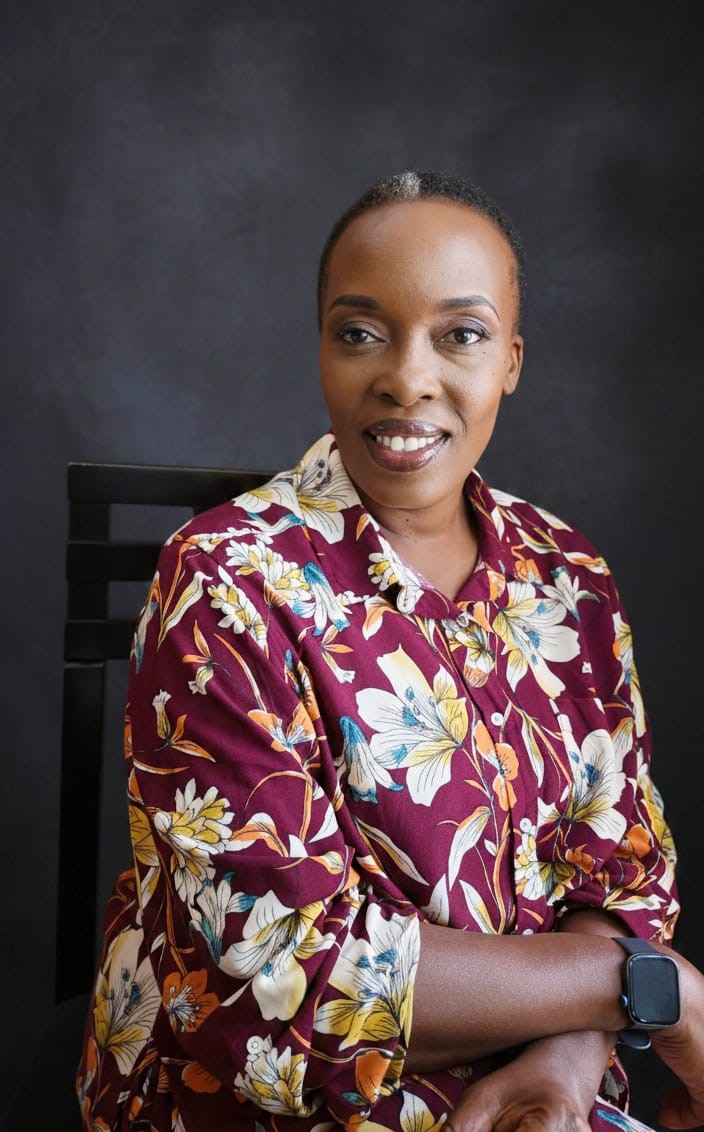
In the quiet village of Busula in Uganda’s Luwero District, 31-year-old Flavia Namawejje lives a life shaped by resilience, hardship, and faith.
Her journey began far from here, in Bweyogerere, where she was raised by her mother after losing her father at just three months old. As an only child, she grew up under difficult financial circumstances. Though she completed Senior Six, her education ended there due to a lack of school fees.
Rough start
In search of a better life, Namawejje relocated to Mukono, where she stayed with her cousin and helped run a stall at Bonabalye Market. It was there that the first signs of domestic conflict emerged. A disagreement over the household nanny, whom Namawejje accused of neglecting proper child feeding practices, led to a fallout with her cousin. To her shock, rather than siding with her, her cousin asked her to leave.
With nowhere to go, she turned to a young man who had previously shown interest in her. He had since moved to Luwero, and upon reaching out to him, he invited her to join him there. With his support of UGX 100,000, plus UGX 140,000 she had saved, Namawejje returned to Mukono, where she started a small fruit stall and rented a room near Uganda Christian University.
“I had just started walking in faith,” she recalls. “But I fell. I became pregnant. He wasn’t born-again either.”
At first, she mistook her symptoms for fever, only to learn she was already three months pregnant. She refused his suggestion of an abortion, left Mukono, and moved in with him permanently in Luwer o.
Moments of joy
Her partner worked as a metal scrap driver and, together, they managed to start building a life. Their first child, a girl was born prematurely at seven months. Eventually, her partner left employment and became an independent scrap dealer. With newfound stability, they bought land and even built a house.
But the happiness was short-lived.
Turning tides
As the scrap business flourished, so did her partner’s pride and temper. “He became distant, argumentative,” she says.
The birth of their second child marked a more serious crisis. Just two days old, the baby developed severe breathing problems. Initial hospital reports diagnosed a hole in the heart.
“I rejected that report in prayer. We were transferred to Mulago Hospital. It turned out the baby had suffered pressure during birth, affecting her lungs,” Namawejje says.
They stayed three and a half months in hospital, her daughter on oxygen, her mother praying constantly with their pastor. “There were nights I didn’t think she’d make it to morning,” she recalls. Miraculously, the child recovered.
Bitter revelation
While still admitted, Namawejje learned from a friend that her husband had started seeing another woman. At first, she dismissed it as gossip. But eventually, the rumours proved true. “She became pregnant, and that’s when I knew it was serious,” Namawejje says.
Her husband grew more distant, refusing even to contribute money for medical follow-ups.
The scrap business had grown, and he used his deliveries to the company as a cover for visiting the second woman. A whistleblower eventually confirmed he had rented a house for the new partner in Luwero.
When Namawejje confronted him, he denied it.
New reality
One night at 3 a.m., the other woman called. Her husband got dressed and left. When she asked where he was going, he said a client had arrived. But her prayers revealed a vision: the woman in labour, her husband by her side, and the birth of a baby boy.
Upon his return, she served him dinner and congratulated him on the new baby. He was stunned.
Eventually, the tension reached its peak. A misunderstanding involving a trusted boda boda rider, now a truck driver was the final straw. When her husband saw her being transported by the rider to sell scrap, he told her to leave his house.
She bought a small mattress, packed her things, and left.
Struggling but standing
Since 2019, Namawejje has lived alone with her two children.
In 2022, he stopped paying school fees. She resorted to loans, and when she defaulted, she was imprisoned for seven months. Fortunately, her friend eventually bailed her out.
Last year, she even picked plastic bottles to raise school fees. Still, she remains hopeful. “I lean on Philippians 4:13 and 4:19,” she says.
Message of strength
To men, Namawejje offers a sobering plea: “Don’t treat women like scrap. Even if the relationship fails, take care of your children.” To fellow women: “Trust in God.”
Her friend, Damalie Nakamya, sums it up best: “Namawejje has suffered wrongfully, but she’s one of the strongest mothers I know. She’s raised her children with grace.”