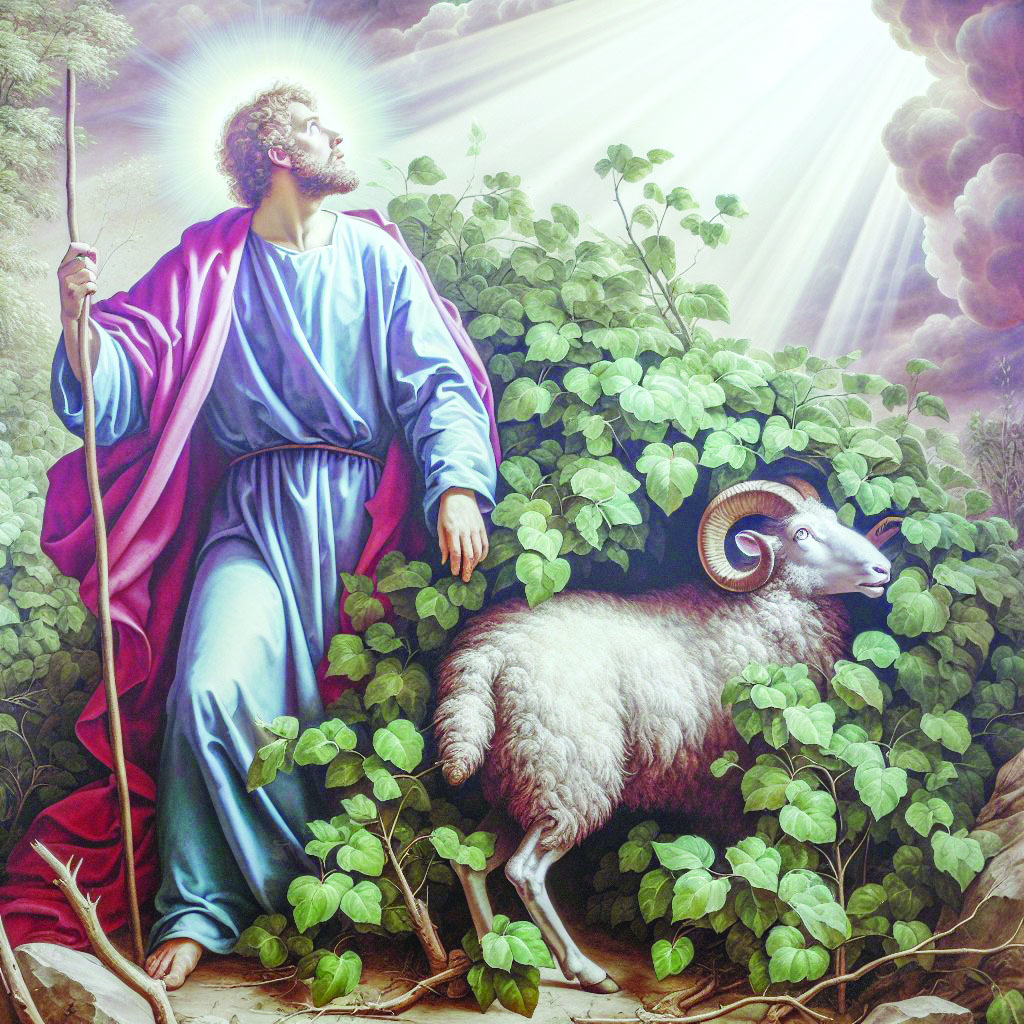
Genesis 22:10–14 is one of the most dramatic moments in Scripture. Abraham had obeyed God’s command to take his beloved son, Isaac to the land of Moriah and offer him as a sacrifice. The narrative reaches its climax when Abraham stretches out his hand and takes the knife to slay his son. At that precise moment, God intervenes:
“But the angel of the LORD called to him from heaven and said, ‘Abraham, Abraham!’ … ‘Do not lay your hand on the boy'” (Genesis 22:11–12).
The timing is significant. God did not stop Abraham when he left home. He did not intervene halfway up the mountain. He waited until Abraham’s obedience had been fully demonstrated. Then, at what appeared to be the last possible moment, God provided the solution.
When Abraham lifted his eyes, he saw a ram caught in a thicket by its horns. The ram became a substitute sacrifice for Isaac. Abraham therefore named the place “The LORD will provide” (Yahweh Yireh), declaring that “on the mountain of the LORD it shall be provided” (Genesis 22:14).
The story teaches that God’s provision often arrives precisely when it is needed, not necessarily when it is expected. Humanly speaking, Abraham’s situation seemed hopeless. Yet God already had a solution prepared. The ram was not created at that instant; it was already there in God’s providential plan, waiting for the right moment to be revealed.
Understanding the generosity of God in the ram
The ram reveals several aspects of God’s generosity.
First, God provides what Abraham could not provide for himself. Abraham could bring wood, fire, and obedience, but he could not create a substitute sacrifice. The provision came entirely from God.
Second, God’s generosity exceeds mere survival. God did not simply spare Isaac; He reaffirmed His covenant promises to Abraham afterward (Genesis 22:15–18). God’s gifts often extend beyond immediate needs toward His larger purposes.
Third, the ram demonstrates grace. Isaac received life he did not earn. Likewise, many blessings in life come not because of human merit but because of God’s kindness.
Missing God’s providence in the thicket
One of the striking details of the story is that the ram was nearby, yet Abraham did not notice it until God directed his attention. The ram was present, but unseen.
The same can happen in life. Sometimes God’s provision is close at hand, yet people become so focused on their problems that they fail to see the resources, opportunities, relationships, or answers God has placed before them.
Fear often narrows vision. Anxiety causes people to focus exclusively on the knife and the altar while overlooking the ram in the thicket.
Impatience can have the same effect. Because God’s provision does not arrive according to human schedules, people may conclude that He is absent when He is actually preparing an answer.
Worldly thickets that obscure God’s providence
There are many “thickets” that can prevent people from recognising God’s provision.
Materialism can become a thicket. When wealth becomes the primary measure of blessing, people may overlook spiritual gifts, faithful friendships, wisdom, or service opportunities.
Pride can become a thicket. Some people refuse help because they want solutions to come through their own abilities rather than through God’s unexpected means.
Distraction is another thicket. Constant busyness, entertainment, and the pursuit of success can crowd out attentiveness to God’s activity.
Bitterness can also obscure providence. Past disappointments sometimes make people skeptical of future blessings, causing them to miss new opportunities God places before them.
Unbelief may be the greatest thicket of all. If a person assumes God will not act, he or she may fail to recognise God’s hand even when provision arrives.
Conclusion
Genesis 22:10–14 teaches that God is not merely a God who commands; He is a God who provides. Abraham discovered that God’s answer was already prepared before he could see it. The ram in the thicket reminds believers that divine provision often appears at the moment of greatest need. Yet the story also challenges readers to lift up their eyes. Like Abraham, we may be so focused on the crisis before us that we fail to see the provision God has already placed nearby. Faith is not only trusting that God can provide; it is also learning to recognise the ram in the thicket when He does so.