

By Beatrice Nakibuuka
Many women associate the removal of the womb with losing their identity, but doctors say the procedure can restore health, dignity and quality of life.
For years, 45-year-old Sarah Namusoke lived with heavy menstrual bleeding that slowly took control of her life. Some months, she would bleed for weeks, leaving her weak, exhausted and unable to carry out her daily activities.
Although doctors advised her to consider surgery, the thought of losing her womb terrified her. Like many women, she had grown up hearing that hysterectomy meant losing part of what made her a woman.
“I thought my life would never be the same again. I feared that my husband would no longer see me the same way and that I would lose my identity,” she recalls.
Her fears are shared by many women who hear the word hysterectomy. Some associate it with the end of femininity, while others believe it marks the end of intimacy, marriage or their ability to live a normal life. As a result, some women continue enduring years of pain, excessive bleeding and declining health because they are afraid of undergoing the procedure.
However, medical experts say many of these fears are rooted in myths rather than facts. According to Dr John Sekyanzi, a gynecologist at Women’s Hospital International and Fertility Centre Bukoto, hysterectomy is sometimes the procedure that saves a woman’s life or gives her back the quality of life she lost because of chronic reproductive health problems.
“Many women arrive at the hospital frightened because of stories they have heard in communities. Some believe that once the womb is removed, life completely changes for the worse. But many of these fears come from misinformation rather than medical facts,” he says.
A hysterectomy is one of the most common major gynecological surgeries performed worldwide. In Uganda, doctors say the procedure is increasingly being performed as more women seek treatment for conditions such as fibroids, cancers and other reproductive health complications.
Despite its medical importance, hysterectomy remains one of the most misunderstood procedures among women. Myths surrounding the surgery continue to influence health decisions, sometimes causing women to delay seeking care until their conditions become severe.
What exactly is a hysterectomy?
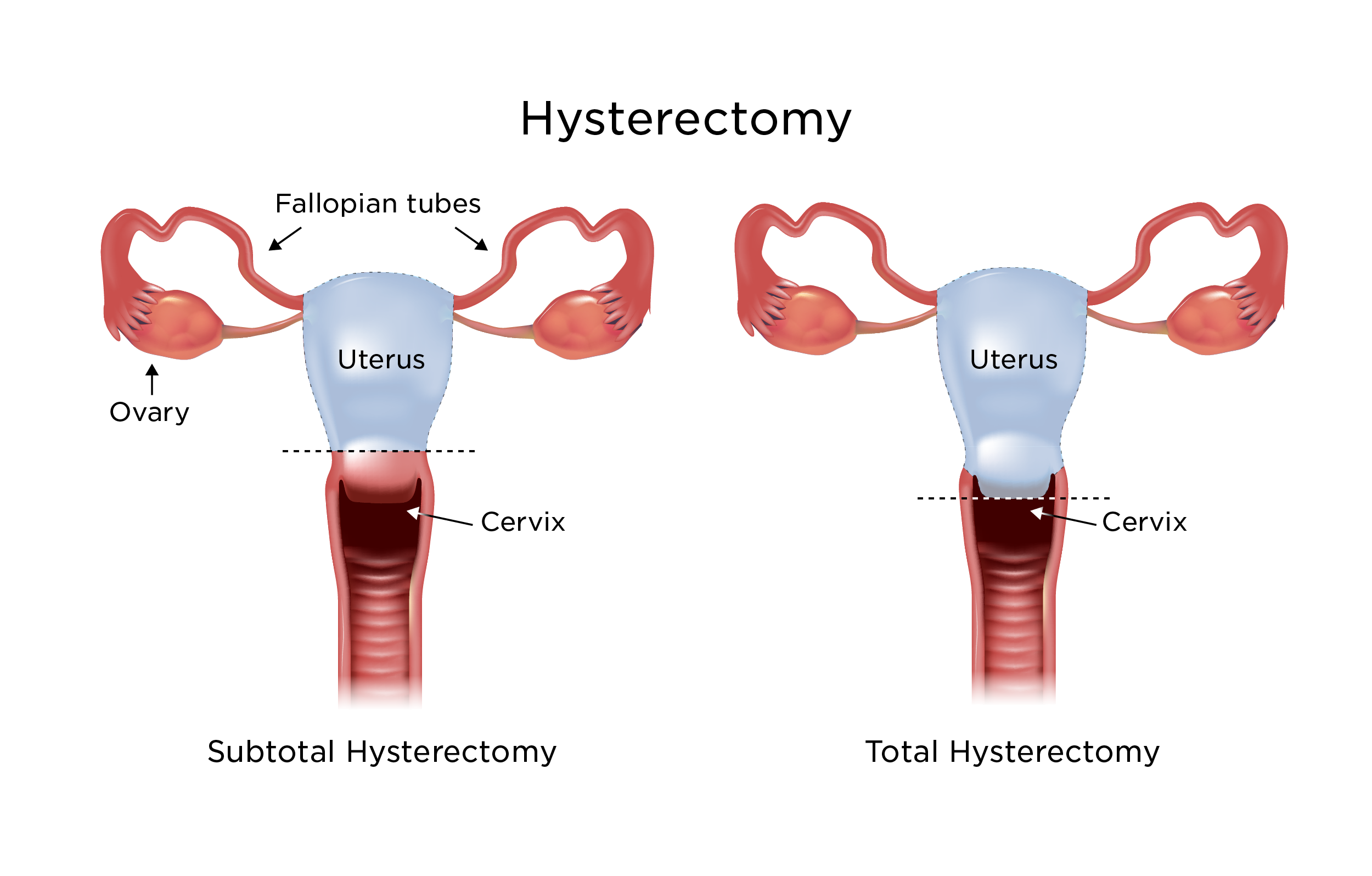
A hysterectomy is a surgical procedure to remove the uterus, commonly known as the womb. Once the uterus is removed, a woman can no longer become pregnant and will stop menstruating.
Dr Sekyanzi explains that there are different types of hysterectomy depending on the patient’s condition.
“A total hysterectomy involves removing both the uterus and the cervix. A subtotal or partial hysterectomy removes only the upper part of the uterus while leaving the cervix intact,” he says.
Another type known as a radical hysterectomy is mainly performed in cancer patients and involves removing the uterus, cervix, nearby tissues, and sometimes part of the vagina.
Doctors may also remove the ovaries and fallopian tubes during surgery if disease has spread or if there is concern about cancer risk.
“The ovaries are important because they produce hormones such as estrogen and progesterone. If they are removed, especially in younger women, the body enters menopause immediately,” Dr Sekyanzi explains.
The surgery can be performed through the abdomen, vagina, or using minimally invasive laparoscopic techniques depending on the patient’s condition and the resources available at the hospital.
Why women undergo hysterectomy
According to Dr Sekyanzi, uterine fibroids remain one of the leading reasons Ugandan women undergo hysterectomy.
Fibroids: These are non-cancerous growths that develop in or around the uterus. While some women may never experience symptoms, others develop severe pelvic pain, heavy bleeding, abdominal swelling, infertility, or recurrent miscarriages.
“Some women bleed continuously until they become dangerously anemic,” Dr Sekyanzi says and adds: “Others develop very large fibroids that compress nearby organs like the bladder.”
Besides fibroids, hysterectomy may also be recommended for endometriosis, adenomyosis, chronic pelvic pain, trauma, uterine prolapse, severe postpartum bleeding, unsafe abortions, and cancers affecting reproductive organs.
Uterine prolapse, where weakened pelvic muscles allow the uterus to slip downward into the vagina, is particularly common among women who have had multiple childbirths.
“In severe prolapse cases, women may struggle to walk comfortably or even control urine properly,” he explains.
In emergency situations, doctors may also perform hysterectomy to save a mother’s life after childbirth complications involving uncontrollable bleeding.
“When bleeding cannot be stopped through other methods, removing the uterus may become the only option to save the patient,” Dr Sekyanzi says.
When cancer changes everything
For some women, hysterectomy is not simply about relieving pain or controlling heavy bleeding. It becomes a battle for survival.
Margaret Achieng, a 52-year-old mother of five from Jinja, had already gone through menopause when she suddenly started bleeding again. At first, she dismissed it, hoping it was a temporary hormonal change.
“I thought maybe it was just hormones or some herbal medicine I had taken,” she says.
However, the bleeding persisted and was later accompanied by pelvic pain, unexplained weight loss and constant fatigue. After visiting several health facilities, she was eventually referred to a specialist hospital in Kampala, where doctors diagnosed her with cervical cancer.
“The cancer had already spread within the reproductive organs by the time Achieng reported to us,” Dr Sekyanzi explains, adding that in such situations, a radical hysterectomy may be necessary to remove the uterus, cervix, surrounding tissues, and sometimes nearby lymph nodes to prevent further spread of the disease.
For Achieng, the diagnosis brought fear and uncertainty.
“My first fear was death. Then I worried about the operation itself. I kept asking whether I would still live a normal life afterward,” she says.
Dr Sekyanzi says cancer-related hysterectomies are among the most emotionally challenging because women are not only dealing with the physical effects of surgery but also the fear and anxiety that comes with a cancer diagnosis.
Today, after undergoing surgery and completing treatment, Achieng encourages women not to ignore warning signs such as bleeding after menopause, persistent pelvic pain or unusual vaginal discharge.
Are there alternatives?
Although hysterectomy can be life-saving, Dr Sekyanzi stresses that it is not always the first treatment option. Doctors first assess whether less invasive approaches can manage the condition.
“We first evaluate whether less invasive treatments can help,” he explains.
For women with fibroids, treatment options may include medication, hormonal therapy or myomectomy, a procedure that removes fibroids while preserving the uterus.
Women experiencing abnormal bleeding may also benefit from hormonal intrauterine devices or other treatments aimed at reducing excessive bleeding.
“The decision depends on age, severity of symptoms, future fertility plans, and overall health,” Dr Sekyanzi says.
However, he cautions that alternative treatments may not be suitable for every woman.
“There are situations where the disease is advanced, symptoms are severe, or the woman’s life is at risk. In such cases, hysterectomy becomes medically necessary.”
How doctors make the decision
One of the biggest concerns among women is whether doctors recommend hysterectomy too quickly. However, Dr Sekyanzi says the decision follows careful medical assessment.
“We do not simply decide to remove the uterus without proper investigations,” he says. There must be scans, laboratory tests, physical examinations, and discussions with the patient.
Doctors consider several factors, including the size and location of fibroids, severity of bleeding, response to previous treatments, possibility of cancer, and the extent to which the condition affects a woman’s daily life.
“In some situations, delaying surgery becomes more dangerous than the operation itself. If the bleeding does not stop within an hour, and the patient is unconscious, we are usually forced to remove the uterus with or without the patient consent. We only get to explain after the procedure is done so that we preserve her life,” he explains.
The risks women should know
Like any major surgical procedure, hysterectomy carries potential risks. Short-term complications may include infection, excessive bleeding, blood clots, reactions to anaesthesia, and injury to nearby organs such as the bladder or intestines.
Recovery time depends on the type of surgery performed and the woman’s general health.
“A woman may need several weeks before returning fully to normal activities,” Dr Sekyanzi says.
During recovery, women are usually advised to avoid heavy lifting, strenuous work and sexual intercourse until their bodies have healed.
Possible long-term effects may include pelvic floor weakness, urinary problems, scar tissue formation, or early menopause if the ovaries are removed. However, Dr Sekyanzi emphasises that many women recover successfully and experience significant improvement in their quality of life after surgery.
Hormones and menopause
Hormonal changes remain one of the greatest concerns among women considering hysterectomy. However, Dr Sekyanzi explains that the impact depends largely on whether the ovaries are removed.
If the ovaries remain intact, they can continue producing hormones until a woman reaches natural menopause.
However, removing the ovaries causes estrogen levels to drop suddenly, resulting in what is known as surgical menopause.
“The symptoms can be intense because menopause happens abruptly,” he says.
Women may experience hot flashes, night sweats, mood changes, vaginal dryness, disturbed sleep and reduced sexual desire. Some may require hormone replacement therapy depending on their age, symptoms and medical history.
Emotional healing matters too
While much attention is given to physical recovery, the emotional impact of hysterectomy is often overlooked.
Dr Sekyanzi says some women experience grief, anxiety and fears about their identity and relationships after surgery.
“In African societies, motherhood is strongly tied to womanhood. So, losing the womb can become emotionally painful, especially for women who still hoped to have children,” he says.
Sexual health
One of the most common myths surrounding hysterectomy is that it completely ends a woman’s sexual life.
Dr Sekyanzi says this belief is inaccurate.
“Hysterectomy does not automatically end a woman’s sexual life,” he explains.
However, factors such as hormonal changes, vaginal dryness, emotional distress or surgical complications can affect sexual wellbeing for some women.
“Open communication between partners and proper medical follow-up are very important,” he advises.
In fact, some women report improved intimacy after recovery because they are no longer living with chronic pain, heavy bleeding or fear of unintended pregnancy.
Although Uganda does not have comprehensive national statistics on hysterectomy procedures, gynecologists say the number of women undergoing the surgery is increasing.
The rise is partly linked to better diagnosis of fibroids, cancers and other gynecological conditions.


