

By Beatrice Nakibuuka
Healthy soil is the foundation of productive farms but for generations, many Ugandan farmers have focused on improving crop yields through improved seeds, fertilisers and pesticides.
Soil is not simply a medium where crops grow. It is a living ecosystem containing microorganisms, organic matter, minerals, water and air. The health of this ecosystem determines how well crops withstand drought, diseases and changing weather patterns.
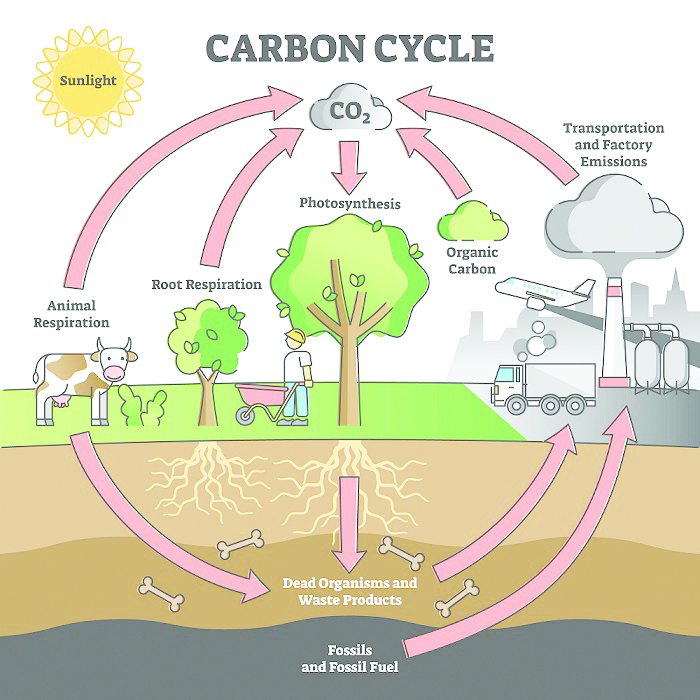
One of the most important indicators of healthy soil is soil organic carbon, the carbon stored in decomposed plant materials, animal residues, roots and microorganisms.
Moses Lumu, an agronomist, says increasing soil organic carbon is one of the most sustainable ways farmers can restore declining soil fertility.
“Organic carbon acts like the engine of the soil. It improves soil structure, helps the soil hold water, supports beneficial microorganisms and makes nutrients available to plants. When soils lose organic carbon, they become less productive because they cannot support strong crop growth,” he explains.
Why soil organic carbon matters
Across Uganda, declining soil fertility has become a major challenge, especially in areas where land is cultivated continuously without adequate restoration. Repeated cropping, soil erosion, burning crop residues and excessive tillage gradually reduce the organic matter available in the soil.
According to Lumu, soils with sufficient organic carbon are better equipped to support farmers through changing weather conditions.
“Ugandan farmers are increasingly experiencing irregular rainfall and longer dry spells. Soils rich in organic matter act like a sponge; they absorb and store water during rains and release it slowly when crops need it,” he says.
Organic carbon also improves soil structure by helping soil particles bind together. This creates spaces that allow roots to grow deeper, improves drainage and reduces soil compaction.
Add organic materials back into the soil
The simplest way farmers can increase soil organic carbon is by regularly adding organic matter. Materials that were once considered waste can become valuable resources for rebuilding soil.
Farmers can use compost, well-decomposed animal manure, crop residues, grass clippings, fallen leaves and mulch.
Lumu advises farmers not to burn crop residues after harvesting because they are an important source of nutrients and carbon.
“When farmers burn maize stalks, bean residues or other crop remains, they lose valuable organic material. Instead, these materials should be returned to the soil where they decompose and feed soil organisms,” he says.
Composting crop residues and animal manure before applying them to gardens and fields also improves their value because decomposition reduces harmful pathogens and makes nutrients more available.
Keep the soil covered
Bare soils are common after harvesting, but leaving land exposed for long periods accelerates soil degradation. Direct sunlight, wind and heavy rainfall can wash away topsoil and reduce organic carbon levels.
Lumu recommends maintaining soil cover through mulching, cover crops or leaving crop residues on the farm.
“Nature does not leave soil bare. In forests and grasslands, the soil is always covered with leaves and plant materials. Farmers can copy this principle by protecting their fields with organic cover,” he explains.
Mulching also helps suppress weeds, reduce evaporation and maintain soil moisture during dry periods.
Plant cover crops and diversify farming systems. Cover crops are plants grown mainly to protect and improve the soil rather than for immediate harvest. They provide additional plant material, increase root activity and feed microorganisms.
In Uganda, farmers can use legumes such as beans, cowpeas and mucuna because they add nitrogen to the soil. Other crops with strong root systems help improve soil structure by opening pathways within compacted soils.
“Every crop interacts differently with the soil. A farmer who grows the same crop year after year removes the same nutrients and encourages the same pests and diseases. Crop rotation helps maintain balance,” Lumu says.
Rotating cereals with legumes and including periods where the soil can recover can gradually rebuild fertility.
Reduce excessive tillage
Many farmers rely on repeated ploughing to prepare land, but excessive soil disturbance can accelerate the loss of organic carbon.
“When soil is turned frequently, organic matter breaks down faster because it is exposed to more oxygen. Over time, the soil loses its ability to store carbon,” Lumu explains.
He encourages farmers to adopt conservation agriculture practices such as minimum tillage, planting basins and reduced soil disturbance where possible.
Support healthy roots
Plants are among the biggest contributors to soil carbon. As roots grow, they release substances that feed microorganisms around them. When roots die and decompose, they add organic material back into the soil.
Farmers can encourage stronger root growth by maintaining proper soil fertility, preventing compaction and selecting crop varieties suited to their environment.
“Healthy roots mean healthy soils. The more roots a farmer maintains in the soil, the more opportunities there are to build organic carbon,” Lumu says.
Increasing soil organic carbon is not an overnight process. Depending on soil type, climate and farming practices, noticeable improvements may take several seasons or years.


