By Nicholas Akasula
Penny Mbabazi is a social entrepreneur with a rich background in human rights, community development, and clean energy. Her journey towards founding LINKAGES, a social enterprise supporting rural women and youth, was birthed out of deep compassion and a desire to bridge the gap between advocacy and action.
She began her career by pursuing a Bachelor of Social Sciences at Makerere University, later earning a Master’s degree in International Human Rights Law from Brunel University in the United Kingdom.
Human rights work
Mbabazi’s career in human rights research and advocacy began at the Foundation for Human Rights Initiative (FHRI). Her work focused on transitional justice in Northern Uganda, particularly in the districts of Amuria, Gulu, and Kiryandongo to inform national policies.
“While at FHRI, I focused on the Northern Uganda conflict, particularly around transitional justice. That experience highlighted a gap for me between research and the practical needs of communities,” she recalls.
During one of her field research trips, Mbabazi encountered a group of over 40 women whose plight touched her deeply. “They were vulnerable yet full of hope. I was gathering information for research to inform national processes, yet what they really needed were resources, not a report,” she says.
She soon realised the disconnect between advocacy and lived realities. “We often tell people to know their rights, to vote, to speak up, but many of them are simply wondering how to put food on the table or send their orphans to school. That’s when I saw the real gap,” she says.
Some of the women expressed frustration at being repeatedly interviewed without seeing change. “They told me, ‘You people just come here to remind us of all the bad things that happened to us. You might as well throw us into the lake so the crocodiles can eat us and end our suffering.’ Those words pierced me,” she recalls.
Spark of faith
On returning from the field, Mbabazi approached her supervisor and suggested creating a small project to support the women, proposing a modest budget of three million shillings to help them start small businesses. However, her idea was turned down.
“He told me, ‘We are a research and advocacy organisation; we don’t provide services.’ I left his office, but the thought never left me,” she says.
Leap of faith
In 2017, Mbabazi’s contract at FHRI ended, and she decided to step away from human rights work. “I didn’t know what I was going to do next, but I knew my time there had served its purpose,” she says.
Then came a new opportunity. A woman Mbabazi had met at a conference reached out about a position at EnVenture Enterprises, a social enterprise focusing on clean energy access. “She said they needed an acting director while she went on maternity leave. After several interviews, I got the job and worked there for two years. But I still felt a pull towards community work,” she says.
Birth of LINKAGES
“When I completed the Rotary project, I prayed, ‘God, if I could find an opportunity to do this full-time, I would.’ That silent prayer became LINKAGES,” she recounts.
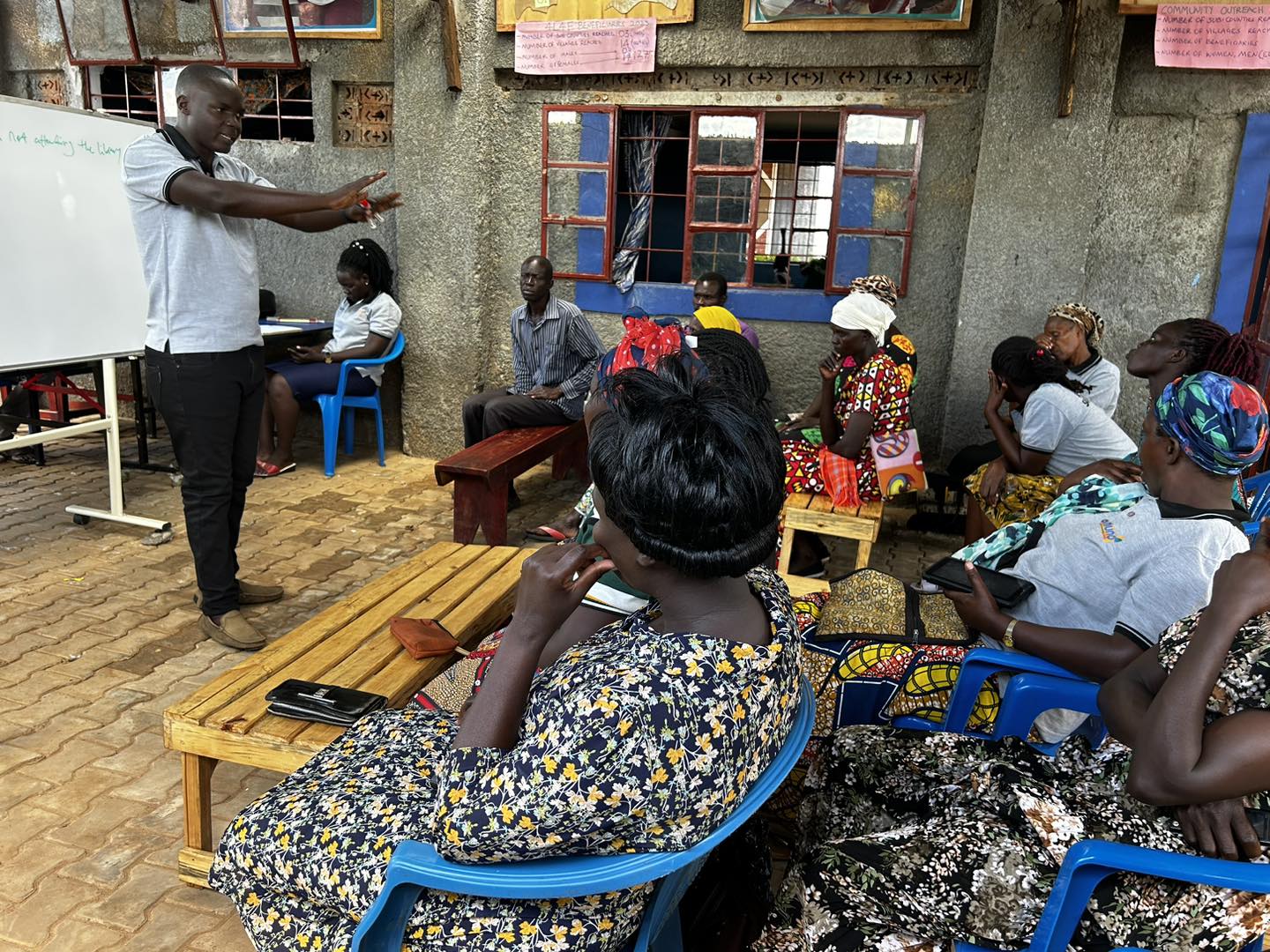
In August 2020, she founded LINKAGES Uganda, a social enterprise dedicated to providing microloans to rural women and young people using the Village Savings and Loans Association (VSLA) model.
“It’s been an exciting journey of learning and unlearning. We focus on empowering rural women and youth to start their own businesses. I have so much compassion for them because I’ve seen how even a small loan can transform a life,” she says.
Transforming Lives
Although funding remains a major challenge, Mbabazi finds fulfilment in witnessing change. “When you meet these women after six months or a year and see them smiling, dressed better, and doing well, that’s what keeps me going.”
Now four and a half years old, LINKAGES employs six people and continues to grow. Mbabazi’s dream is for the organisation to expand to every district in Uganda, helping more women achieve economic independence and provide for their families.
Testimonies of change
“In my late twenties, life was tough with no partner to support me,” says Ayaa Judith, a 31-year-old single mother and member of the Waribucingwa Silver Fish Saving Group in Gulu. “Every coin I earned went to school fees, rent, food, and medical bills. Borrowing from banks was impossible due to high interest rates. But when our group joined LINKAGES, I accessed affordable loans, restocked my business, and my income grew. Today, my children are in school, we no longer struggle with rent, and my brother earns a living from the motorbike I bought for him.”
Mbabazi’s story is one of compassion turned into impact—proof that true change begins when empathy meets action.